
The Flying Elephant Memoirs of Alexander Savin

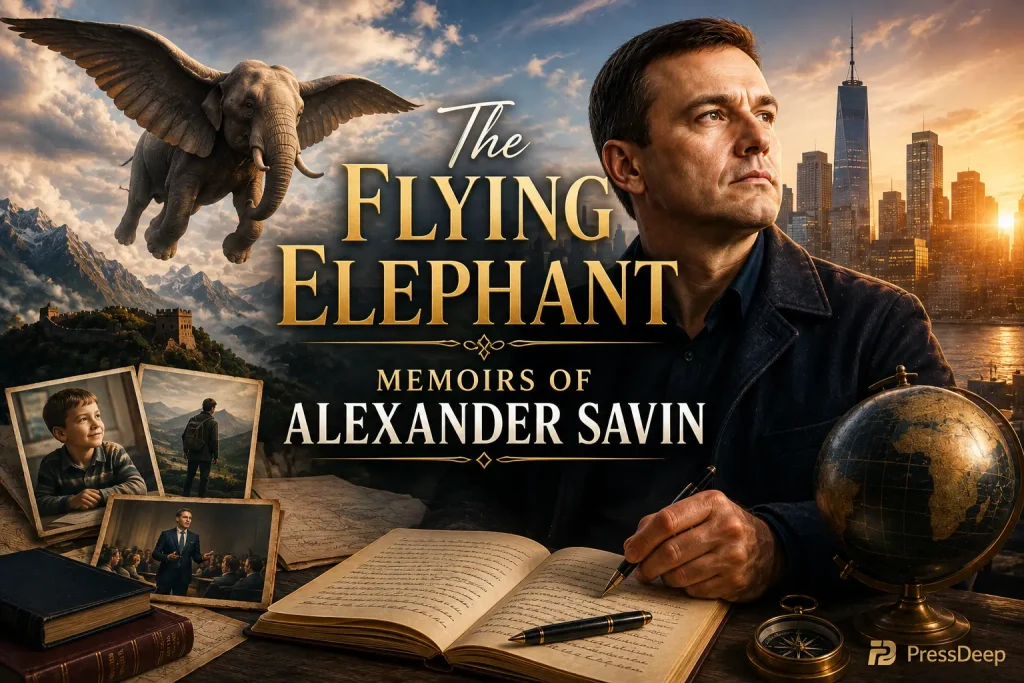
The Flying Elephant Memoirs of an Olympic Champion Alexander Savin brings readers into a world where sporting greatness was built through relentless training, team discipline, international pressure, and years of sacrifice.
At the center of the memoir is Alexander Savin, one of the major figures of Soviet volleyball during its dominant period. He represented the Soviet Union at two Olympic Games, winning silver in Montreal in 1976 and gold in Moscow in 1980. His career also included major international success at World Championships, World Cups, and European Championships.
That sporting background gives The Flying Elephant: Memoirs of an Olympic Champion considerably more depth than a simple motivational sports story. It offers a personal route into Olympic volleyball, Soviet sporting culture, teamwork, competitive pressure, coaching, and the people who helped create one of volleyball’s most successful eras.
For volleyball enthusiasts, sports-history readers, athletes, coaches, and anyone interested in what happens behind Olympic medals, Alexander Savin’s story provides plenty to explore.
What Is The Flying Elephant Memoirs of an Olympic Champion?
The Flying Elephant: Memoirs of an Olympic Champion is a sports memoir centered on the life and volleyball career of Alexander Savin.
The English Kindle edition is listed as a 514-page work published in October 2025. Current information about the edition also describes an extensive collection of more than 240 photographs, giving the memoir an archival element alongside Savin’s personal story.
Rather than treating the Olympic gold medal as an isolated achievement, the memoir places it within a much larger journey.
Readers encounter themes involving:
- Early athletic development
- Soviet volleyball training
- National-team competition
- Olympic pressure
- Teammates and coaches
- Victory and disappointment
- Discipline and resilience
- Leadership
- Athlete identity
- Life beyond major competitions
This broader perspective is important because an Olympic result tells only a small part of an athlete’s story.
The Flying Elephant Book at a Glance
| Detail | Information |
|---|---|
| Full title | The Flying Elephant: Memoirs of an Olympic Champion |
| Central figure | Alexander Savin |
| Genre | Sports memoir / volleyball autobiography |
| Sport | Volleyball |
| Olympic appearances | Montreal 1976 and Moscow 1980 |
| Olympic medals | Silver in 1976, Gold in 1980 |
| English format | Kindle edition |
| Listed length | 514 pages |
| Main themes | Competition, discipline, teamwork, Soviet volleyball and Olympic sport |
| Best suited for | Volleyball fans, athletes, coaches and sports-history readers |
Savin’s Olympic record is confirmed by Olympedia, while the International Volleyball Hall of Fame documents his wider importance to the sport.
Who Is Alexander Savin?

Alexander Borisovich Savin was born on July 1, 1957, in Taganrog in what was then the Russian SFSR of the Soviet Union.
Standing around two meters tall, Savin developed into an elite volleyball player and became a central member of the Soviet national team during one of its strongest periods.
He competed at the 1976 Montreal Olympics, where the Soviet men’s volleyball team won silver. Four years later, Savin returned at the Moscow Olympics and won gold.
His achievements extended well beyond those two Olympic tournaments.
Savin was part of Soviet teams associated with major victories including:
- 1977 FIVB World Cup gold
- 1978 FIVB World Championship gold
- 1980 Olympic gold
- 1981 FIVB World Cup gold
- 1982 FIVB World Championship gold
He also accumulated considerable success at the European level. His long-term contribution to international volleyball was formally recognized when he was inducted into the International Volleyball Hall of Fame in 2010.
That record helps explain why an Alexander Savin memoir has significance beyond fans who simply want an inspirational sports story.
Why Is It Called The Flying Elephant?
The unusual title immediately separates the book from more conventional Olympic memoirs.
The idea of a “flying elephant” captures a striking contrast: physical size and power combined with exceptional movement and jumping ability.
Savin was a physically imposing volleyball player, yet his effectiveness depended on far more than size. Elite volleyball at the highest level requires timing, explosiveness, coordination, anticipation, positioning, and the ability to move quickly around the net.
The title therefore works on several levels.
It represents:
- Physical power combined with athletic movement
- Doing something that initially appears improbable
- Turning natural characteristics into competitive advantages
- Developing technique through repetition and training
- The transformation required to become an elite athlete
The phrase also gives the memoir an identity that is more memorable than a conventional title centered simply on medals or championships.
From Montreal Silver to Moscow Gold
One of the most compelling ways to understand Alexander Savin’s career is through his two Olympic appearances.
The 1976 Montreal Olympics
Savin made his Olympic debut in Montreal in 1976.
The Soviet Union entered the tournament with a strong volleyball tradition, but the team ultimately finished with the silver medal. Olympedia records Savin as a member of that second-place Soviet team.
For an elite athlete, silver can carry two meanings simultaneously.
It is an extraordinary achievement, yet reaching an Olympic final and falling short of gold can also create a powerful sense of unfinished business.
That makes the period between 1976 and 1980 particularly important when examining Savin’s story.
The 1980 Moscow Olympics
Four years later, the setting was dramatically different.
The Olympics were being held in Moscow, placing the Soviet team in front of a home audience and creating enormous expectations.
This time, Savin and his teammates finished first.
The 1980 Olympic gold medal became one of the defining achievements of Savin’s playing career and helped restore the Soviet men’s team to the top of the Olympic podium.
Viewed together, Montreal and Moscow create a natural competitive arc: silver followed by gold, disappointment followed by triumph.
The Golden Era of Soviet Volleyball
To appreciate The Flying Elephant memoirs of an Olympic champion, readers should understand the sporting environment surrounding Savin.
The Soviet Union was one of international volleyball’s major powers.
Success was not built around a single superstar. Teams relied heavily on organized systems, disciplined preparation, technical precision, tactical structure, physical conditioning, and collective responsibility.
Savin emerged inside that environment.
The International Volleyball Hall of Fame describes him as part of the generation that returned Soviet men’s volleyball to the top of the Olympic podium in Moscow after earlier Olympic disappointments.
This historical setting makes the memoir valuable in two different ways.
It is both a personal sports story and a window into an influential period of volleyball history.
More Than an Olympic Medal Story
A weaker sports biography can become a sequence of victories, statistics, and awards.
A more interesting memoir examines what exists between those moments.
That includes the repetitive training sessions no spectators see, relationships between teammates, pressure before major competitions, coaching decisions, physical exhaustion, disappointment, and the mental challenge of remaining successful once expectations become enormous.
Those are the areas that give Alexander Savin’s story broader appeal.
The real subject is not simply winning.
It is what is required to compete repeatedly at a level where winning is expected.
Major Themes in Alexander Savin’s Memoir
Discipline Over Short-Term Motivation
Elite athletes cannot depend entirely on feeling motivated.
Training continues when enthusiasm disappears.
Savin’s career illustrates the importance of sustained preparation over many years. Olympic champions are built through thousands of ordinary training sessions rather than a single extraordinary competition.
This makes discipline one of the central lessons readers can take from the book.
Teamwork Before Individual Glory
Volleyball makes it impossible for one athlete to succeed alone.
Every rally depends on coordinated movement, passing, setting, blocking, attacking, covering, communication, and trust.
For that reason, a volleyball memoir naturally differs from the autobiography of an athlete competing in a purely individual sport.
Savin’s success belonged to a team structure.
The story therefore gives considerable importance to teammates, coaches, mentors, and the collective culture surrounding high-performance volleyball.
Resilience After Disappointment
The path from Montreal silver to Moscow gold gives the memoir a powerful lesson in resilience.
Failure at the highest level does not necessarily mean total collapse. Sometimes it becomes part of the development process.
The four-year gap between Olympic tournaments demonstrates the long timescale on which elite athletes often have to operate.
There is no immediate second attempt.
The athlete has to continue working.
Handling Pressure
Olympic competition creates pressure few people experience.
Athletes are not simply performing a skill. They are doing it under intense scrutiny while representing a team and, particularly during Savin’s era, an entire national sporting system.
The Moscow Olympics added another layer because Savin’s team was competing at home.
Handling such pressure is part of what separates elite performers from athletes who possess similar physical talent.
The Cost of Excellence
Championships are visible.
Sacrifices usually are not.
High-level sport requires enormous investments of time and energy. Training schedules can affect family life, education, travel, social experiences, physical health, and personal freedom.
Sports memoirs become more meaningful when they explore this side of achievement rather than presenting success as effortless.
Why the Soviet Sports Context Matters

Alexander Savin’s story unfolded during the Cold War.
International sport carried political and cultural significance far beyond the competition itself. Olympic events were often treated as demonstrations of national strength and sporting systems.
That context matters when reading an Olympic memoir from a Soviet athlete.
The pressure was not purely personal.
Players performed inside a highly organized sporting structure where international results carried national significance.
For modern readers, this creates another dimension to the book.
It provides an opportunity to look at sport not only as entertainment but also as part of history.
The Role of Teammates and Coaches
Champions are often remembered individually.
Team sports rarely work that way in reality.
An athlete’s development can depend on:
- First coaches
- National-team coaches
- Experienced teammates
- Training partners
- Medical and conditioning staff
- Tactical systems
- Competition for team selection
One of the valuable aspects associated with The Flying Elephant is its attention to the wider volleyball community around Savin rather than turning every historical event into a story about one individual.
This makes the memoir particularly relevant to coaches and serious volleyball players.
Rare Photographs and Volleyball History
One of the notable features attributed to the English Kindle edition is its visual archive.
Current descriptions of the book state that it contains more than 240 photographs connected with Savin’s life, teams, competitions, and volleyball history.
Historical photographs can add considerable value to a memoir.
They allow readers to see:
- Players from the era
- Team environments
- Training culture
- International competitions
- Changing volleyball equipment
- Uniforms and facilities
- Personal moments away from competition
For readers interested specifically in Soviet volleyball history, this visual dimension may be almost as interesting as the written narrative.
The Flying Elephant Compared With a Typical Sports Memoir
| Area | The Flying Elephant | Typical Athlete Memoir |
|---|---|---|
| Main sport | Volleyball | Varies |
| Historical setting | Soviet-era international sport | Often contemporary |
| Olympic journey | Central to the story | May or may not feature |
| Team dynamics | Highly important | Depends on sport |
| Historical value | Strong for volleyball readers | Varies considerably |
| Visual archive | Extensive photographic material is reported | Usually limited photo sections |
| Major themes | Discipline, teamwork, pressure, legacy | Achievement and personal development |
| Audience | Volleyball fans, athletes, coaches, sports-history readers | General sports readership |
| Perspective | Champion within a powerful team system | Often strongly individual |
What Makes This Volleyball Memoir Different?
There are countless memoirs from football, basketball, boxing, tennis, athletics, and other globally popular sports.
Detailed volleyball autobiographies are less common, particularly in English when the athlete comes from the Soviet era.
That gives Savin’s memoir a more specialized appeal.
It provides access to:
- Olympic volleyball history
- Soviet sporting culture
- High-level team preparation
- An elite middle blocker’s perspective
- Major international tournaments
- Stories from a different generation of professional sport
For serious volleyball readers, that specificity is an advantage rather than a limitation.
What Modern Athletes Can Learn From Alexander Savin
Athletic preparation has changed significantly since Savin’s competitive years.
Technology, sports medicine, nutrition, analytics, recovery methods, equipment, and tactical analysis have all advanced.
Human performance principles, however, have not changed completely.
Modern athletes can still learn from ideas such as:
Consistency Beats Occasional Intensity
One exceptional training session cannot replace months of consistent work.
Teams Require Trust
An athlete can possess extraordinary ability and still fail within a poorly connected team.
Setbacks Need Perspective
A disappointing result can become one chapter rather than the ending.
Technique Matters Alongside Physical Ability
Size and strength help, but movement, timing, positioning, and technical understanding transform physical advantages into performance.
Success Creates New Pressure
Winning does not remove pressure.
It often increases expectations.
Who Should Read The Flying Elephant?
The book has an obvious audience among volleyball fans, but its potential readership extends further.
Volleyball Players
Players can learn about the mentality, discipline, and team environment surrounding one of the sport’s accomplished champions.
Coaches
Coaches may find value in the treatment of team culture, athlete development, preparation, leadership, and relationships.
Olympic Sports Fans
Anyone fascinated by Olympic history can view major competitions from the perspective of an athlete who experienced both silver and gold.
Sports History Readers
The Soviet sporting environment gives the memoir historical significance beyond volleyball.
Readers of Athlete Biographies
People who enjoy stories about resilience, high performance, sacrifice, and personal development may appreciate it even without detailed volleyball knowledge.
Is Volleyball Knowledge Required?
No extensive knowledge of volleyball is necessary to understand the larger themes.
Knowing the sport can make tactical and historical references more meaningful, but the core subjects are universal:
- Ambition
- Pressure
- Competition
- Failure
- Discipline
- Friendship
- Leadership
- Teamwork
- Achievement
- Identity
These ideas extend well beyond the volleyball court.
Why Alexander Savin’s Career Still Matters

Sports history can become overly focused on recent athletes because modern performances are easier to access through video, social media, statistics, and digital archives.
Older generations can gradually become less visible.
Savin’s record deserves historical attention.
He competed in two Olympic Games and earned a medal at both. He was part of Soviet teams that won major World Championship and World Cup titles, and his career eventually earned him induction into the International Volleyball Hall of Fame.
A memoir helps preserve more than those statistics.
It preserves memory.
Statistics can tell future readers that a team won.
A memoir can explain what belonging to that team actually felt like.
Frequently Asked Questions
What is The Flying Elephant Memoirs of an Olympic Champion about?
The Flying Elephant: Memoirs of an Olympic Champion centers on Soviet volleyball champion Alexander Savin and explores his athletic journey, major competitions, Olympic experiences, teammates, discipline, sporting culture, and life at the highest level of international volleyball.
Who is Alexander Savin?
Alexander Savin is a former Soviet volleyball player born in 1957. He represented the Soviet Union at the 1976 and 1980 Olympic Games and later became an inductee of the International Volleyball Hall of Fame.
Did Alexander Savin win an Olympic gold medal?
Yes. Savin won Olympic gold with the Soviet men’s volleyball team at the 1980 Moscow Games.
Did Alexander Savin compete in the 1976 Olympics?
Yes. He represented the Soviet Union at the Montreal Olympics in 1976, where the team earned the silver medal.
Why is the book called The Flying Elephant?
The title reflects the contrast between Savin’s imposing physical presence and the athletic movement and jumping ability required to compete at an elite level in volleyball.
Is The Flying Elephant a volleyball autobiography?
It can broadly be described as a volleyball memoir or sports autobiography because it recounts Savin’s life and experiences as an Olympic volleyball champion.
Is The Flying Elephant available as a Kindle edition?
Yes. An English Kindle edition is currently listed, with a reported length of 514 pages.
Does The Flying Elephant include photographs?
Current descriptions of the English edition state that it includes more than 240 photographs connected with Savin’s career and volleyball history.
Was Alexander Savin inducted into the Volleyball Hall of Fame?
Yes. The International Volleyball Hall of Fame lists Aleksandr Savin as a 2010 inductee in the Male Indoor Player category.
Is the memoir only suitable for volleyball fans?
No. Volleyball fans will naturally understand more of the sporting context, but its themes of discipline, teamwork, resilience, competitive pressure, sacrifice, and leadership can appeal to a broader audience.
Conclusion
The Flying Elephant Memoirs of an Olympic Champion Alexander Savin is more than the story of an athlete who stood on an Olympic podium.
Savin experienced both sides of elite Olympic competition: silver in Montreal in 1976 and gold in Moscow four years later. Around those achievements was a much larger career that included World Championship victories, World Cup success, European competition, and eventual recognition by the International Volleyball Hall of Fame.
What makes his story worth exploring is everything surrounding those medals.
There is the demanding culture of Soviet volleyball, the responsibility of competing within a team, the pressure of performing internationally, the influence of coaches and teammates, the response to disappointment, and the discipline required to remain among the world’s best athletes.
For volleyball enthusiasts, The Flying Elephant preserves part of the sport’s history. For athletes and coaches, it provides a perspective on preparation and teamwork. For general readers, it presents a human story about what happens when talent is combined with years of disciplined effort.
Olympic medals capture a moment. A memoir can preserve the journey that made that moment possible.