I Am a College Student. Are La Roche-Posay Products Better for Acne-Prone Skin Than Neutrogena?

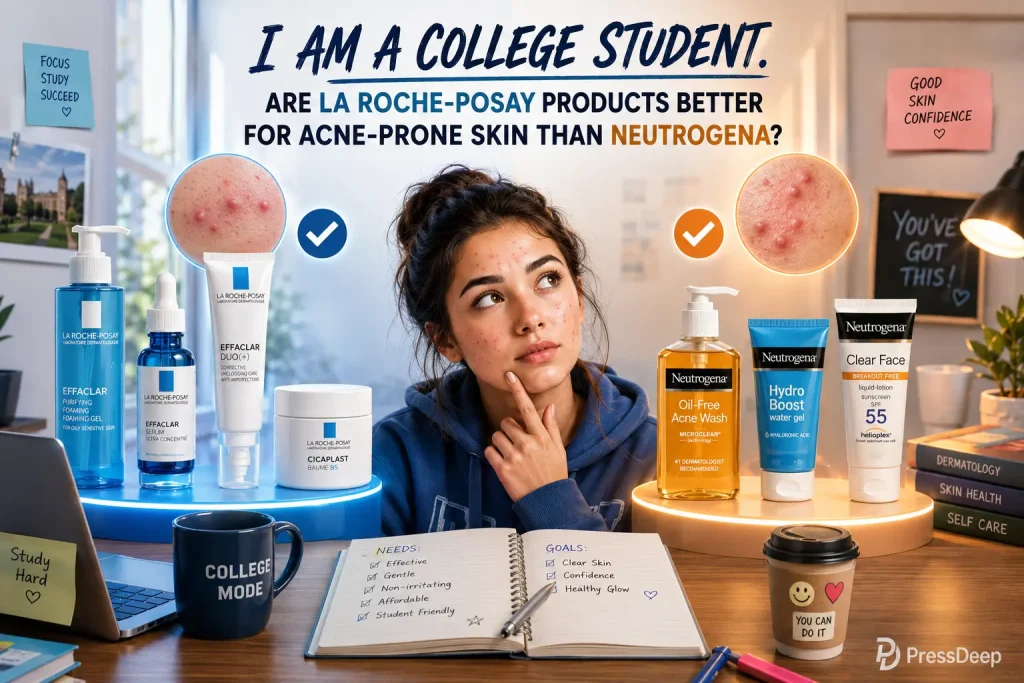
If you are a college student dealing with acne, choosing between La Roche-Posay and Neutrogena can be confusing. Both brands offer cleansers, acne treatments, moisturizers, and products containing proven acne-fighting ingredients. The bigger question is whether paying more for La Roche-Posay actually gives you better results than choosing the generally more accessible Neutrogena options.
The short answer is: La Roche-Posay is not automatically better than Neutrogena for every acne-prone person. La Roche-Posay may appeal more to people who want a carefully structured acne routine or whose skin becomes irritated easily, while Neutrogena can be an excellent choice for college students looking for straightforward and budget-conscious acne products.
The ingredient and product you choose usually matter more than the brand name itself.
La Roche-Posay vs Neutrogena for Acne-Prone Skin
Both companies make products specifically designed for acne and oily skin.
La Roche-Posay’s Effaclar range currently includes products containing acne-treatment ingredients such as salicylic acid, benzoyl peroxide, and azelaic acid. Its acne line also includes cleansers designed to remove excess oil without making cleansing unnecessarily aggressive.
Neutrogena also offers a large selection of acne products containing salicylic acid and benzoyl peroxide. Its current lineup ranges from salicylic-acid cleansers to benzoyl-peroxide treatments in different strengths.
That means neither brand wins simply because it has stronger acne ingredients. Both can provide legitimate acne-treatment options.
| Factor | La Roche-Posay | Neutrogena |
|---|---|---|
| Acne-focused product range | Extensive | Extensive |
| Salicylic acid products | Yes | Yes |
| Benzoyl peroxide products | Yes | Yes |
| Options for oily skin | Strong selection | Strong selection |
| Sensitive-skin consideration | Often a major appeal | Depends heavily on individual product |
| Simple drugstore routine | Good | Excellent |
| Student-budget friendliness | Usually less favorable | Usually more favorable |
| Post-acne concerns | Several targeted options | Several targeted options |
| Best overall choice | Sensitive or carefully managed routines | Affordable, straightforward acne routines |
What Actually Makes an Acne Product Effective?
When comparing La Roche-Posay vs Neutrogena for acne, looking only at the label on the bottle can lead you in the wrong direction.
Acne develops when pores become clogged with oil and dead skin cells, and inflammation can also become involved. Different acne ingredients target different parts of this process.
Salicylic Acid
Salicylic acid helps exfoliate inside clogged pores and can be particularly useful for blackheads, whiteheads, and some pimples. The American Academy of Dermatology identifies it as an established acne ingredient that helps open clogged pores and exfoliate skin.
You can find salicylic acid products from both La Roche-Posay and Neutrogena.
For a college student dealing mostly with:
- blackheads around the nose
- small forehead bumps
- oily skin
- clogged pores
- occasional pimples
a salicylic-acid product may make more sense than choosing a brand simply because it looks more premium.
Benzoyl Peroxide
Benzoyl peroxide is another widely used acne medication. It is particularly useful for inflammatory acne and pimples. The American Academy of Dermatology describes benzoyl peroxide as one of the commonly used and effective treatments for acne.
Again, both brands offer it.
For example, La Roche-Posay currently sells an Effaclar acne face wash containing 4% benzoyl peroxide, while Neutrogena offers treatments containing benzoyl peroxide at different concentrations, including a 2.5% On-the-Spot treatment.
Higher strength does not automatically mean better skin. Stronger acne treatments can also increase dryness and irritation.
Azelaic Acid
Azelaic acid can be useful when acne and post-acne discoloration are both concerns. The American Academy of Dermatology notes that azelaic acid can treat acne while also helping fade dark spots left after acne clears.
La Roche-Posay currently includes an azelaic-acid treatment within its Effaclar range, giving the brand another option for people who want to address breakouts and post-acne marks in the same routine.
Is La Roche-Posay Better for Sensitive Acne-Prone Skin?
This is one area where many students may find La Roche-Posay appealing.
Acne-prone skin does not necessarily mean your skin can tolerate aggressive treatment. You can simultaneously have oily, acne-prone, and sensitive skin.
The problem begins when someone uses:
- a strong acne cleanser
- an exfoliating toner
- another acid serum
- a benzoyl peroxide treatment
- and very little moisturizer
all at once.
Instead of clearing acne faster, that routine may leave the skin dry, uncomfortable, flaky, or irritated.
Some products within La Roche-Posay’s Effaclar range are explicitly designed around cleansing oily skin while maintaining a relatively gentle cleansing approach. For example, its Effaclar Gel Facial Wash is described by the company as cleansing dirt and oil while respecting the skin’s pH balance.
That does not mean every La Roche-Posay product will work for sensitive skin, however. Acne treatments containing active ingredients can still cause irritation.
Is Neutrogena Good for Acne-Prone Skin?
Yes. Neutrogena should not be dismissed simply because many of its products are widely available in drugstores.
The company currently has numerous acne cleansers and treatments based on salicylic acid and benzoyl peroxide.
That makes it particularly practical for college students who need something that is:
- easy to find
- simple to replace
- suitable for a limited skincare budget
- based on established acne ingredients
- easy to fit into a small routine
The important part is choosing the appropriate Neutrogena product rather than assuming every product marketed for acne is suitable for your particular skin.
Which Brand Is Better for Different Types of Acne?
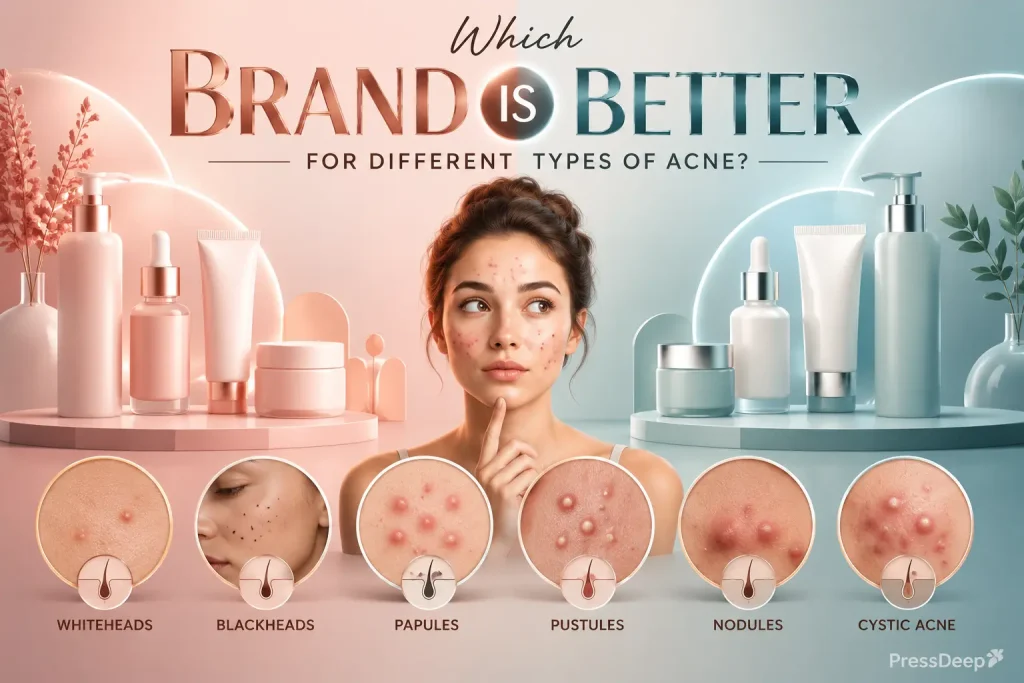
Your acne type can tell you more than the brand name.
Blackheads and Whiteheads
If clogged pores are your main concern, look for salicylic acid.
Both brands have appropriate options.
A complicated five-product routine is usually unnecessary if a well-tolerated salicylic-acid product already addresses the main issue.
Red and Inflamed Pimples
Benzoyl peroxide may be more relevant when inflammatory pimples are the main problem.
Dermatologists commonly recommend benzoyl peroxide or salicylic acid for certain inflamed acne lesions.
Both La Roche-Posay and Neutrogena offer benzoyl-peroxide treatments, so there is no automatic brand winner here.
Oily Skin With Frequent Clogged Pores
Both companies have strong options.
La Roche-Posay may be attractive if you want an Effaclar-centered routine using products from the same acne-focused line.
Neutrogena may be better if you simply want an acne cleanser and lightweight supporting products without spending heavily on an entire routine.
Sensitive, Easily Irritated Skin
This is where product selection becomes especially important.
Instead of looking for the strongest acne treatment available, consider starting slowly and keeping the rest of your routine basic.
A gentle cleanser, moisturizer, sunscreen, and one acne active can sometimes be more manageable than several aggressive treatments.
Post-Acne Marks
If your pimples disappear but leave visible dark marks, consider products that target both acne and discoloration.
Azelaic acid may be worth considering, and consistent sunscreen use also becomes particularly important.
La Roche-Posay or Neutrogena for a College Student Budget?
For students, price matters.
A skincare routine that works but costs too much to replace consistently may not be practical. Acne care usually requires consistency rather than an expensive product used occasionally.
This gives Neutrogena an important advantage for many students: it can make building a straightforward routine easier without automatically requiring premium skincare spending.
Instead of buying six products, prioritize the basics.
A practical routine might contain:
- A cleanser
- One acne treatment
- A moisturizer
- Sunscreen for daytime
Spending money on several overlapping acne products can actually make your routine harder to manage.
A Simple College Student Routine for Acne-Prone Skin
You do not need an elaborate 10-step routine to take care of acne-prone skin.
Morning
Cleanse your face with a gentle cleanser.
If your treatment plan includes a morning acne medication, use it according to the product instructions.
Follow with a lightweight moisturizer.
Finish with sunscreen.
Evening
Cleanse your skin to remove sunscreen, excess oil, sweat, and daily buildup.
Apply your chosen acne treatment if appropriate.
Finish with moisturizer.
If your skin starts becoming excessively dry or irritated, reconsider how many active products you are using and how frequently you are applying them.
Can You Use La Roche-Posay and Neutrogena Together?
Yes. Your skincare products do not have to come from one brand.
You might prefer:
- a La Roche-Posay cleanser
- a Neutrogena acne treatment
- a moisturizer from another company
- a sunscreen from a completely different brand
There is no medical requirement that an entire skincare routine come from one manufacturer.
What matters is whether the products work together without unnecessarily duplicating strong ingredients.
For example, using a benzoyl-peroxide cleanser, strong salicylic-acid toner, exfoliating serum, and additional acne spot treatment at the same time may be unnecessarily irritating for some people.
Common Mistakes College Students Make With Acne Products
Switching Products Too Quickly
Acne rarely disappears after two or three uses.
Frequently changing products makes it difficult to determine which ingredient is helping and which one is causing irritation.
Using Too Many Acne Ingredients
More treatment does not always produce faster results.
Layering several strong acne products can make the routine increasingly difficult for your skin to tolerate.
Scrubbing Acne
Acne is not caused simply because your face is dirty.
Aggressive scrubbing can irritate already inflamed skin.
Skipping Moisturizer Because Your Skin Is Oily
Oily skin can still become dehydrated or irritated.
Using acne treatments without adequate moisturization can make dryness more noticeable.
Picking Pimples
Picking may make inflammation worse and can increase the likelihood of lingering marks or scarring.
Ignoring Sunscreen
Sunscreen should still be part of an acne-prone skincare routine, particularly when using treatments that may leave your skin more sensitive or when post-acne marks are a concern.
When La Roche-Posay May Be Worth the Extra Money
La Roche-Posay may make more sense if:
- your acne-prone skin is easily irritated
- you prefer its Effaclar-focused acne system
- you want several targeted options within one product family
- you are dealing with acne plus post-acne marks
- you already know your skin responds well to its formulations
- the higher cost fits comfortably within your budget
The key phrase is your skin responds well to it.
A more expensive formula that irritates your face is not better than an affordable product your skin tolerates consistently.
When Neutrogena May Be the Better Choice
Neutrogena may be more suitable if:
- you are building your first acne routine
- your budget is limited
- you want widely available products
- you need a simple salicylic-acid cleanser
- you want a benzoyl-peroxide acne treatment
- you would rather spend money on a few essentials than an entire premium routine
For many college students, this practicality matters considerably.
Is Expensive Skincare Better for Acne?
Not necessarily.
Price and acne effectiveness are not the same thing.
An affordable product containing an appropriate acne ingredient may outperform an expensive formula that does not target your specific type of breakout.
Think about skincare in terms of function.
Ask:
- What type of acne do I have?
- Which active ingredient addresses it?
- Can my skin tolerate that ingredient?
- Can I afford to use this product consistently?
- Is the rest of my routine gentle enough?
Those questions are much more useful than asking which bottle looks more clinical or luxurious.
La Roche-Posay vs Neutrogena: Which Should You Choose?
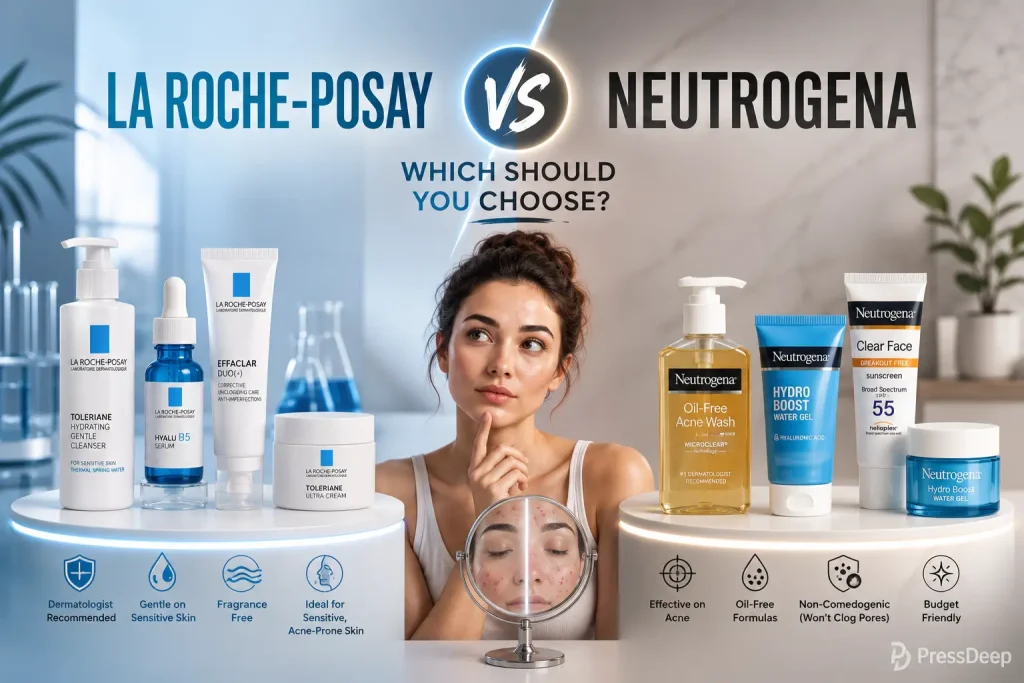
For most college students, there are three practical outcomes.
Choose La Roche-Posay if sensitivity, product texture, or building a more carefully targeted Effaclar routine matters more than keeping costs as low as possible.
Choose Neutrogena if you want an accessible, uncomplicated, and generally budget-conscious way to use established acne ingredients.
Mix the two brands if individual products from each work better for you.
There is no reason your cleanser and acne treatment must have the same logo.
Frequently Asked Questions
Is La Roche-Posay better than Neutrogena for acne?
Not universally. Both brands offer products containing established acne ingredients such as salicylic acid and benzoyl peroxide. La Roche-Posay may be preferable for some sensitive or carefully structured routines, while Neutrogena can be a practical option for students wanting accessible acne treatment.
Is La Roche-Posay good for acne-prone skin?
Yes. Its Effaclar line specifically targets oily and acne-prone skin and currently includes cleansers and treatments using several acne-focused ingredients.
Is Neutrogena good for teenage or college acne?
It can be. Neutrogena offers multiple salicylic-acid and benzoyl-peroxide acne products. Choosing the right active ingredient and using it consistently matters more than age alone.
Which is better for oily skin, La Roche-Posay or Neutrogena?
Both have products for oily acne-prone skin. La Roche-Posay’s Effaclar line has several oily-skin-focused products, while Neutrogena offers numerous oil-free and acne-cleansing options. The better choice depends on how your skin reacts to the individual formulation.
Can I use Neutrogena cleanser with La Roche-Posay moisturizer?
Yes. Skincare brands can generally be mixed. Pay more attention to the active ingredients and whether the combination causes dryness or irritation.
Is salicylic acid or benzoyl peroxide better for acne?
They work differently. Salicylic acid is particularly useful for clogged pores, blackheads, and whiteheads, while benzoyl peroxide is commonly used for inflammatory pimples.
Should I buy the strongest acne treatment available?
Not necessarily. Stronger products may also increase irritation. A treatment you can tolerate and use correctly is generally more useful than an unnecessarily harsh formula.
How many acne products does a college student need?
A basic routine can be quite small: cleanser, one appropriate acne treatment, moisturizer, and daytime sunscreen. Additional products should solve a specific problem rather than simply making the routine longer.
When should I see a dermatologist for acne?
Consider professional evaluation when acne is severe, painful, producing nodules or cysts, causing scars, significantly affecting you emotionally, or not improving despite appropriate over-the-counter care. Prescription options such as topical retinoids are also available when needed.
Conclusion
So, if you are asking, “I am a college student. Are La Roche-Posay products better for acne-prone skin than Neutrogena?”, there is no universal winner.
La Roche-Posay can be worth considering if you want a more targeted acne-focused range, have skin that becomes irritated easily, or are willing to spend more on products that suit your particular routine. Neutrogena remains a strong choice for students who want accessible, uncomplicated products containing established acne-fighting ingredients without making skincare unnecessarily expensive.
Instead of choosing a brand first, identify your main concern. Blackheads and clogged pores may call for salicylic acid, while inflamed pimples may benefit from ingredients such as benzoyl peroxide. Then build a simple routine your skin can tolerate and your student budget can sustain.
The best acne product is ultimately not the most expensive or fashionable one. It is the one with the right ingredients for your skin that you can use consistently without turning your daily skincare routine into another stressful college assignment.
You May Also Like